How to Choose a Steam Cooker for Sausage and Meat Processing
“How many kilograms can it cook per batch?”
It is a reasonable starting question when comparing industrial steam cookers. But the answer means little without knowing what goes inside the chamber.
Small sausages, poultry portions and large cuts of meat require different loading arrangements. The product dimensions, tray layout and cooking process all help determine whether a machine fits the production requirement.
For processors considering a single-trolley steam cooker, here are the main points to discuss before requesting a quotation.
Start with the Product and Tray Layout
A cabinet’s internal dimensions tell you how much space is available. They do not, by themselves, establish a suitable batch weight.
The supplier also needs to understand how the food will be loaded. Will products sit in a single layer? What tray dimensions are required? How much clearance is needed between levels?
Photos of the product and the proposed loading arrangement can make this discussion much more useful than a capacity figure alone.
Before comparing equipment, prepare:
- Product dimensions and approximate unit weight.
- Preferred tray size.
- Expected loading per tray.
- Required output per batch and per day.
These details provide a practical basis for reviewing the chamber and rack configuration.
Consider How Operators Will Load and Unload
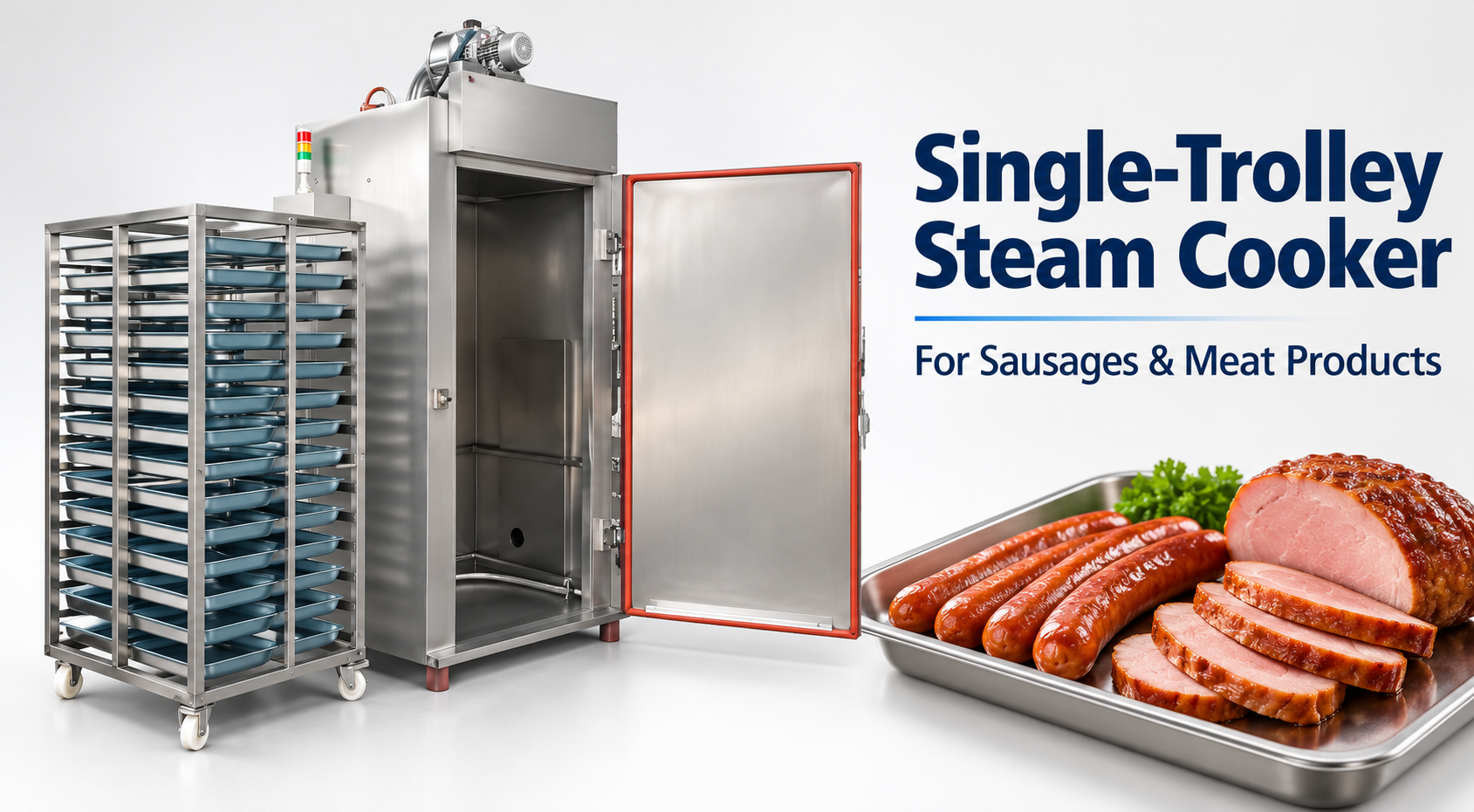
A single-trolley steam cooker uses a removable wheeled rack. Operators can arrange products outside the chamber, check the load and then move the trolley into the cabinet.
The workspace around the equipment matters too. Check the door opening, trolley access and the route to the next processing stage. A machine may fit the available floor area while leaving too little room for convenient handling.
For cooked products, the unloading arrangement should also fit the facility’s hygiene procedures and production layout.
Confirm the Available Steam and Electrical Supply
Utility requirements should be discussed early.
If the factory already has a steam supply, provide the available conditions at the planned installation point. If there is no existing supply, discuss the steam-generation arrangement with the equipment supplier.
Also confirm local voltage, frequency and electrical phase. The heating configuration, steam requirements, electrical load and control functions should be recorded in the agreed technical specification.
This gives both sides a clearer understanding of the equipment and the site preparation required.
Calculate Output Using the Complete Batch Cycle
Daily output depends on more than the time spent cooking.
Loading, heating, the required cooking and holding stages, unloading and cleaning all occupy production time. Cooling and packing capacity can also affect how batches move through the facility.
When discussing output, provide your daily operating hours and explain how the cooker will connect with the surrounding process. This helps the supplier assess the proposed setup in the context of the whole line.
The cooking program itself must be established and validated for the actual product and loading conditions.
A Single-Trolley Steam Cooking Option from Jinbowei
The Jinbowei single-door steam cooker shown here features a stainless steel cabinet and a removable multi-level tray trolley. It provides a batch cooking layout for suitable sausage, meat and other tray-loaded food applications.
The appropriate configuration depends on the product, loading method, available utilities and production target. Material grade, tray specifications, control functions and equipment dimensions should be confirmed before ordering.
Planning a new cooking stage or reviewing an existing setup? Send us your product photos, target output and site utility details. We can discuss a suitable configuration and prepare a quotation.
Jinbowei Food Machinery Co., Ltd.
Website: https://www.foodsequippro.com/
WhatsApp: +852 40947762

