Sausage Clipping Machine for Casing Closure
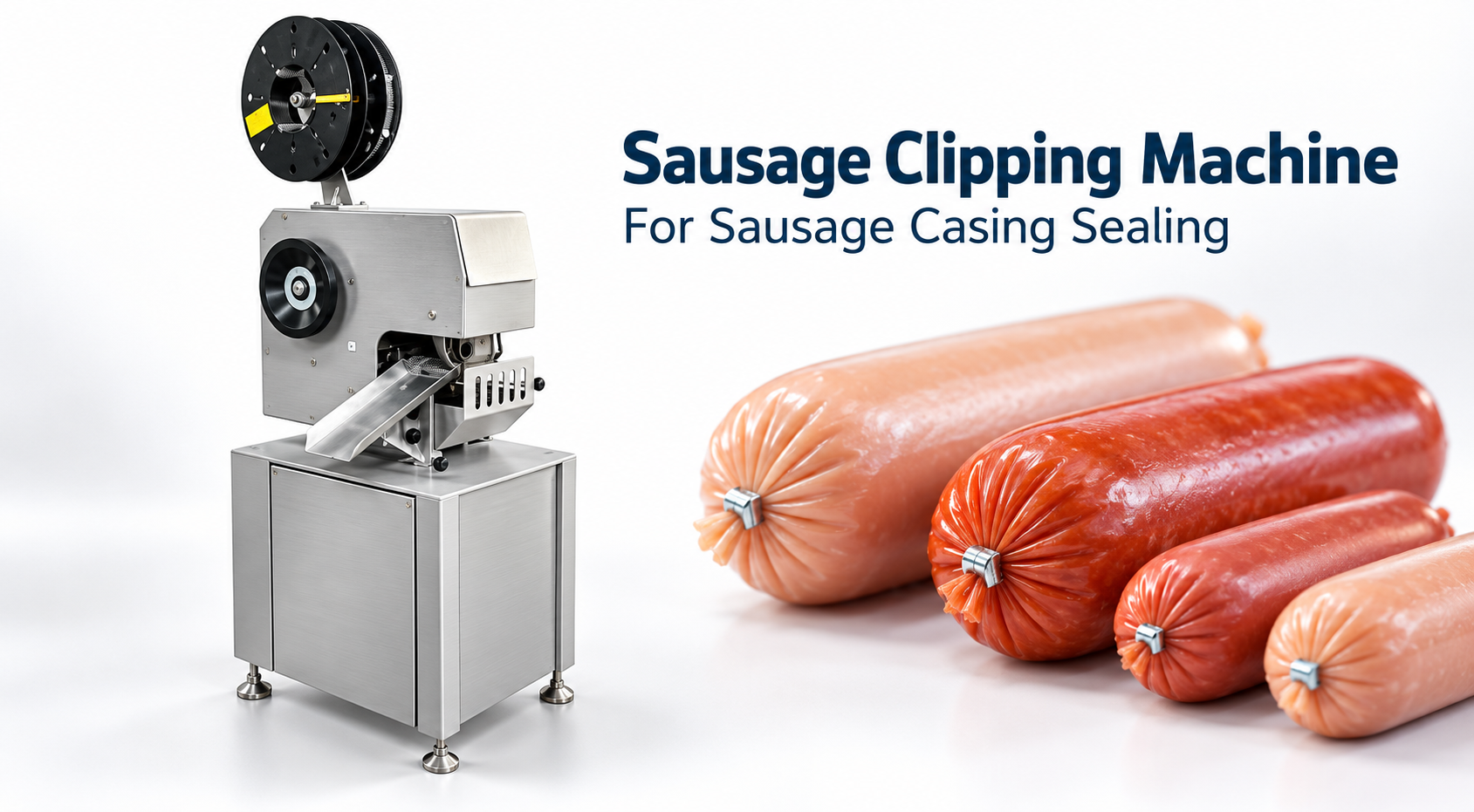
A secure casing closure is an essential step between sausage filling and further processing. A sausage clipping machine applies a metal clip around the gathered casing end, preparing the product for handling and, where required, cooking or smoking.
Closure quality depends on more than the machine alone. Casing thickness, fill level, clip size and closure adjustment all affect the result. Matching these factors helps reduce loose closures, damaged casing and product leakage at the ends.
Typical Applications
Sausage clippers are used for products made with a clipped casing closure, including:
• Large-diameter sausages and meat chubs.
• Selected cooked and smoked sausage products.
• Other filled food products in compatible clip-closed casings.
Suitability must be confirmed for the specific casing and product. Filled diameter alone does not establish compatibility: the material and thickness also determine the size of the gathered casing neck.
Where Clipping Fits into Production
A typical process follows this sequence:
Filling → Gathering the casing end → Applying the clip → Transferring the product → Further processing
The clipper closes the casing. Portion weight and product length depend on the filling equipment and production method.
Cutting, loop attachment and integration with a sausage filler are configuration-specific features and should be confirmed when selecting a machine.
How to Select a Sausage Clipper
Start with the casing
Specify the casing material, size and filled diameter. A casing sample helps assess clip fit and closure quality before the equipment configuration is finalized.
Define the finished product
Provide the target weight and length of each sausage or chub. These details help establish the handling requirements and production cycle.
Specify output in pieces per hour
Include both pieces per hour and kilograms per hour. Two factories producing the same hourly weight may need very different clipping speeds if their portion sizes differ.
Check the filling process
If you already operate a sausage filler, share its model and photographs of the discharge area. This helps assess product transfer, operator access and equipment positioning.
Confirm available utilities
Electrical and compressed-air requirements depend on the selected configuration. Confirm your factory’s voltage, frequency, phase and available air supply before ordering.
Checking Closure Quality
Run trials with the intended casing and clips before starting regular production. Check that the closure holds securely, the casing remains intact and no filling escapes around the clipped end.
For cooked or smoked products, inspect the closure again after processing. A satisfactory result immediately after clipping should also hold up under the product’s actual processing and handling conditions.
Routine care should include removing product residue, checking the clip feed path and inspecting the clipping components according to the operating manual. Follow the specified cleaning and lubrication procedures for the selected machine.
Request a Configuration for Your Product
Jinbowei Food Machinery Co., Ltd. can help assess sausage clipping equipment based on your product specifications and filling process.
For a suitable recommendation and quotation, send:
• Photographs of the finished product and casing closure.
• Casing material and filled diameter.
• Target weight and length per piece.
• Required pieces per hour and daily operating hours.
• Available electrical supply and compressed air.
• Destination country and shipping port.
Jinbowei Food Machinery Co., Ltd.
Website: www.foodsequippro.com

